Suno AI Review 2026: The Complete Guide to AI Music Generation
Updated: 2026-01-19 17:02:45

The AI music generation landscape has transformed dramatically in 2025, with Suno AI emerging as one of the most talked-about platforms in this space. With over seven million AI songs created daily and a user base spanning content creators, musicians, and businesses, Suno has positioned itself as a leader in text-to-music technology. But does it live up to the hype?
This comprehensive Suno AI review examines everything you need to know: from core features and pricing plans to audio quality, legal concerns, and how it compares to competitors like Udio. Whether you're considering the free plan or evaluating the Premier subscription for Suno Studio, this guide will help you make an informed decision.
What Is Suno AI? Understanding the Technology
Suno AI is a generative artificial intelligence music creation platform that transforms text prompts into complete songs with vocals, instrumentals, and lyrics. Unlike traditional music production software that requires technical knowledge, Suno uses advanced AI algorithms to generate professional-sounding tracks in under 60 seconds.
The platform launched in 2023 and quickly gained recognition as the first AI music generator to capture widespread public attention much like ChatGPT did for text generation. Since then, Suno has evolved through multiple versions, with the latest V5 model delivering studio-grade audio quality at 44.1 kHz and supporting extended song lengths up to 8 minutes.
Core Features and Capabilities

1. Text-to-Music Generation
The primary function of Suno is remarkably straightforward. You input a description such as "upbeat pop song with female vocals about summer romance" or "cinematic orchestral soundtrack with dramatic strings," and the AI generates a complete track. The platform supports two modes:
- Simple Mode: Quick generation from basic text prompts, ideal for rapid ideation
- Custom Mode: Full control over lyrics, genre tags, mood specifications, and style parameters
What sets Suno apart from pure instrumental generators is its vocal synthesis capability. The AI can produce realistic singing voices with emotional depth, often creating tracks that sound surprisingly close to radio-ready productions. The platform handles song structure intelligently, generating coherent verses, choruses, and bridges without manual intervention.
2. Suno Studio: Professional-Grade Editing
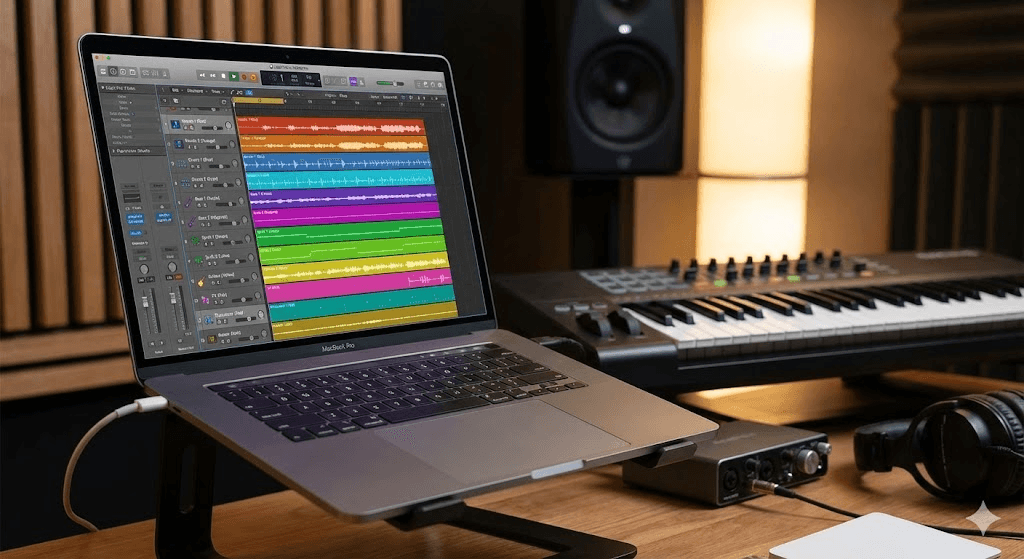
Launched in early 2025, Suno Studio represents a significant evolution in AI music capabilities. Exclusive to Premier plan subscribers, this browser-based generative audio workstation provides DAW-like functionality:
- Stem Separation: Extract up to 12 time-aligned WAV stems (vocals, drums, bass, guitars, etc.) for integration with professional tools like Ableton or Logic Pro
- Multitrack Editor: Edit individual stems, adjust arrangements, and polish tracks without leaving the platform
- MIDI Export: Extract musical data for further manipulation in external DAWs
- Persona Voices: Generate custom voice profiles from your existing recordings
Industry reviews from MusicTech and other publications describe Suno Studio as "the coolest thing to come out in the AI music world ever," though they note it's still in beta with room for improvement. The ability to work on individual stems gives creators significantly more control than the standard prompt-and-generate workflow.
3. Audio Upload and Remixing
Suno allows you to upload audio clips whether voice memos, instrumental loops, or existing tracks and transform them into full compositions. This feature enables creative workflows like:
- Humming a melody and having AI build a complete arrangement around it
- Uploading rough piano sketches and generating fully orchestrated versions
- Remixing tracks in different genres or styles
Pro plan subscribers can upload audio files up to 8 minutes in length, making this feature particularly valuable for producers looking to develop existing ideas rather than start from scratch.
4. Multilingual Support and Lyrics Generation
Suno supports music creation in multiple languages with natural vocal delivery, making it accessible to non-English creators. The built-in lyrics generator can write original lyrics based on your specified mood, tempo, and genre, or you can provide custom lyrics (up to 5,000 characters in V4.5 with the Growth plan).
Suno AI Pricing Plans: Which Subscription Is Right for You?

Understanding Suno's credit-based pricing model is essential for budgeting and maximizing value. Here's a complete breakdown of what each plan offers:
Feature | Free Plan | Pro Plan | Premier Plan |
Price | $0/month | $10/month ($8 annual) | $30/month ($24 annual) |
Monthly Credits | 50 daily (~10 songs/day) | 2,500 (~500 songs) | 10,000 (~2,000 songs) |
Commercial Use | ❌ No | ✅ Yes | ✅ Yes |
AI Model Access | V4.5 and below | V5 (latest) | V5 (latest) |
Suno Studio | ❌ No | ❌ No | ✅ Yes |
Generation Queue | Shared (slower) | Priority | Priority |
Audio Quality and Output: What to Expect
The Good: Impressive for AI-Generated Content
Suno V5 delivers studio-grade audio at 44.1 kHz with notably improved clarity and fuller, more balanced mixes compared to earlier versions. The platform excels at creating:
- Logical song structures: Coherent verses, choruses, and bridges that flow naturally
- Catchy melodies: Hooks and vocal lines that can be surprisingly memorable
- Emotionally resonant vocals: AI-generated singing that captures tone and phrasing convincingly
- Genre versatility: Capable handling of pop, rock, hip-hop, EDM, country, and more
For rough drafts, social media content, or quick demos, Suno often produces results that exceed expectations. Many users report generating tracks that "sound like they could almost be on the radio."
The Limitations: Not Yet Professional-Grade
However, audio professionals consistently note several quality issues that prevent Suno from being release-ready:
- "Flat" vocal quality: Voices often lack the warmth and presence of professional recordings
- Messy stems: Separated tracks can have bleed and artifacts that complicate professional mixing
- Generic tendencies: Output frequently relies on predictable chord progressions and lyrical clichés
- Repetitive elements: Main melodies sometimes loop without variation across extended tracks
- Inconsistent prompt adherence: AI may ignore specific instructions, mispronounce words, or repeat lyrics unexpectedly
User reviews on Trustpilot reveal frustration with these issues, particularly since failed attempts still consume credits. One verified reviewer reported that out of 329 song attempts, only 30 met their quality standards roughly a 9% success rate for highly specific requirements.
Suno vs Udio: How Do They Compare?

The most frequent comparison in AI music generation is between Suno and Udio, its primary competitor. Both platforms offer text-to-music generation with vocals, but they take different philosophical approaches:
Speed and Workflow
Suno: Optimized for rapid generation. Creates complete songs (4+ minutes) in under 60 seconds with minimal input. Ideal for content creators needing quick turnaround on background music or social media content.
Udio: Generates shorter clips (typically 30-90 seconds) that require manual extension to build full songs. Slower overall but offers more control at each generation step.
Audio Quality and Musicality
Suno: Excels at vocal replication and emotional resonance. Vocals add depth that can be appealing for vocal-driven genres. However, compositions tend toward the predictable and can feel "prosaic" after repeated listening.
Udio: Higher fidelity audio with better instrument separation and cleaner mixes out-of-the-box. Creates more dynamic and evolving compositions with tempo changes, syncopation, and melodic variations. Often feels more "organic" and less AI-generated, though less predictable.
Best Use Cases
Choose Suno if you need:
- Fast, complete songs for commercial or background music
- Royalty-free music for YouTube, podcasts, or social media
- Simple, predictable workflow with minimal learning curve
- Vocal-heavy tracks where emotional delivery matters
Choose Udio if you need:
- Higher production values and studio-grade mixing
- More creative and unexpected musical results
- Detailed control over musical structure and evolution
- Extended compositions with complex arrangements
The Copyright Controversy: Critical Legal Considerations

This is perhaps the most important section for anyone considering Suno for commercial projects. The platform currently faces serious legal challenges that create uncertainty for business users.
Current Lawsuits and Allegations
In June 2024, major record labels including Sony Music Entertainment, Universal Music Group, and Warner Records filed federal copyright infringement lawsuits against Suno (and competitor Udio). The Recording Industry Association of America (RIAA) described the allegations as "willful copyright infringement on an almost unimaginable scale."
The core claim: Suno trained its AI model on copyrighted music without permission or licensing. Evidence presented includes:
- Generated tracks that closely resemble famous songs (e.g., Mariah Carey's "All I Want for Christmas," recordings by Chuck Berry, James Brown, and others)
- Analysis showing the AI output failed all four tests used by US courts to determine "fair use" of copyrighted material
- Suno's refusal to disclose training data sources or acknowledge copyrighted material usage
What This Means for Users
For personal use: The legal risk is minimal. Free tier users creating music for private enjoyment are unlikely to face any consequences.
For commercial use: This is where significant risk exists. Even though Suno's Pro and Premier plans grant commercial usage rights, these rights may not protect you if:
- Courts rule that Suno's training methodology was illegal
- Your generated music is found to infringe on specific copyrighted works
- Platforms like YouTube, TikTok, or Spotify flag your content for copyright violations
Multiple reviews and legal analyses recommend that businesses requiring legally defensible music consider alternatives like Beatoven.ai (which carries Fairly Trained certification) or traditional stock music libraries until Suno's legal situation resolves.
Best Practices for Risk Mitigation
If you choose to use Suno for commercial projects despite these concerns:
- Avoid prompts that reference famous artists or songs
- Run musicological checks on output before commercial release
- Keep detailed records of your subscription, generation timestamps, and licensing terms
- Consider using Suno for ideation only, then hiring musicians to re-record similar compositions
- Stay updated on lawsuit developments, as court rulings will set important precedents
User Experience: Interface, Learning Curve, and Reliability
Interface and Accessibility
Suno offers multiple access points: web application, mobile apps (iOS and Android), Discord integration, and Microsoft Copilot. The web interface receives the most praise for usability:
- Clean, intuitive layout that resembles familiar music apps
- Prominent "Create" button makes starting new projects effortless
- Explore function for discovering trending songs and community creations
- Workspace organization for managing different projects or genres
The American Foundation for the Blind's AccessWorld published a detailed review noting that Suno's web application is "highly usable for screen reader users," with proper keyboard navigation and accessible fields. Minor accessibility issues exist (some labeling errors, inconsistent dialogues), but the overall experience remains navigable for users with disabilities.
However, the mobile apps particularly iOS have significant accessibility problems, including file names used as labels and focus order issues.
Learning Curve
One of Suno's greatest strengths is its minimal barrier to entry. You can create your first song within minutes of signing up, with no music theory knowledge required. The challenge comes in mastering prompt engineering to consistently generate desired results.
The official documentation provides basic guidance, but many users turn to YouTube tutorials and community Discord channels to learn advanced techniques. Common learnings include:
- Specific genre tags produce more consistent results than vague descriptions
- Shorter, simpler lyrics work better than complex poetry
- Multiple generation attempts are often necessary to achieve desired quality
- "Anchor instruments" in prompts (e.g., "analog synth bass," "tape-washed piano") improve specificity
The Customer Service Problem
This is where Suno's reputation takes a serious hit. Trustpilot reviews consistently report:
- Emails to support going unanswered for weeks or months
- Incorrect billing charges with no resolution process
- Difficulty canceling subscriptions or obtaining refunds
- No phone support or live chat options available
Multiple verified reviewers describe the company as "dishonest" or a "scam" specifically due to billing issues and non-responsive support. This is particularly concerning for a paid service dealing with subscription models and credit purchases.
Suno AI: Complete Pros and Cons Analysis
Strengths
- Unmatched accessibility: Creates professional-sounding music without any musical training or expensive equipment
- Impressive speed: Generates complete 4-minute songs in under 60 seconds
- Vocal synthesis quality: AI-generated vocals that capture emotional nuance better than most competitors
- Genre versatility: Handles diverse musical styles from classical to hip-hop with reasonable competence
- Suno Studio features: Premier plan offers genuine DAW-like functionality with stem separation and MIDI export
- Generous free tier: 10 songs daily at no cost provides substantial trial opportunity
- Community features: Active Discord community and ability to discover/share creations
- Affordable pricing: $8-10/month Pro plan provides excellent value compared to traditional music production costs
Weaknesses
- Serious legal uncertainty: Ongoing copyright lawsuits create risk for commercial users
- Inconsistent quality: Success rates vary dramatically; many generations require multiple attempts
- Generic musical tendencies: Output often relies on predictable patterns and clichés
- Poor prompt adherence: AI frequently ignores specific instructions or produces unexpected results
- Not professional-grade: Audio quality falls short of release-ready standards for serious music production
- Credit wastage: Failed attempts still consume credits, making costs unpredictable
- Virtually non-existent customer support: Unanswered support requests and billing issues create major frustration
- Limited editing capabilities: Without Premier plan, you cannot granularly edit AI-generated music
- Mobile app accessibility issues: iOS and Android apps have significant usability problems
Who Should Use Suno AI in 2026?

Ideal Use Cases
Content creators and YouTubers: For background music, intros, outros, and social media content where speed and cost-effectiveness matter more than perfection. The royalty-free nature (on paid plans) makes it valuable for avoiding copyright strikes.
Hobbyists and aspiring musicians: Excellent sandbox for exploring musical ideas, writing lyrics, or hearing rough demos of songs you've imagined. The free tier provides substantial creative playground.
Rapid prototyping: Musicians and producers can quickly sketch concepts before investing time in full production. Particularly useful for testing different arrangements or vocal melodies.
Educational purposes: Music educators can demonstrate song structures, genre characteristics, and compositional elements. Students can experiment with creating music across diverse styles.
Personal projects: Creating custom songs for family events, gifts, or personal enjoyment where professional quality isn't essential.
When to Look Elsewhere
Professional music production: If you need release-ready tracks for commercial albums, film scores, or high-budget campaigns, Suno's quality limitations and legal uncertainties make traditional production or more established AI tools (like AIVA for orchestral work) better choices.
Brand music and enterprise use: Companies requiring legally defensible music with clear provenance should consider alternatives with transparent training data. Beatoven.ai's Fairly Trained certification or traditional licensing reduce legal risk significantly.
High-fidelity requirements: Audiophiles or projects demanding pristine mixing and mastering will find Suno's output lacking. Udio offers higher fidelity for instrumental tracks.
Consistent, repeatable results: Workflows requiring predictable output quality will struggle with Suno's variability and prompt adherence issues.
Final Verdict: Is Suno AI Worth It in 2025?
Suno AI represents both the promise and the current limitations of AI music generation. It delivers on its core value proposition: making music creation accessible to anyone, regardless of technical skill or equipment. The ability to generate complete, surprisingly catchy songs in seconds is genuinely impressive and useful for specific applications.
For hobbyists, content creators, and rapid prototyping, Suno offers excellent value particularly at the $8-10/month Pro tier. The free plan provides a generous trial that lets you thoroughly evaluate whether the platform meets your needs before committing financially.
However, three significant concerns prevent a wholehearted recommendation:
- Legal uncertainty: The ongoing copyright lawsuits create real risk for commercial users. Until courts rule on the legality of Suno's training methodology, businesses should proceed cautiously.
- Quality inconsistency: The gap between demo and finished product remains substantial. Professional musicians consistently note that Suno is excellent for ideation but not yet capable of producing release-ready tracks.
- Customer support failures: For a paid service, the lack of responsive support is unacceptable and suggests potential problems with refunds, billing disputes, or technical issues.
Recommendation Summary:
- Try the free tier: Absolutely. There's no downside to exploring Suno's capabilities with the free 10 songs daily.
- Subscribe to Pro ($8-10/month): Worthwhile for content creators, YouTubers, and hobbyists who need background music at scale and can accept legal ambiguity.
- Upgrade to Premier ($24-30/month): Only if you specifically need Suno Studio features and plan to use stems extensively in external DAWs.
- For enterprise/professional use: Wait for legal resolution or choose alternatives with clearer copyright positions.
Suno AI is a fascinating glimpse into the future of music creation, but it's not yet the complete solution for professional music production. Think of it as an incredibly powerful creative assistant rather than a replacement for human musicianship and traditional production workflows.
As the technology matures and legal questions resolve, AI music generation will undoubtedly become more capable and reliable. For now, Suno offers substantial value for specific use cases just be aware of its limitations and proceed with eyes open, particularly for commercial applications.
Want to try Suno AI yourself? Start with the free plan at suno.com to generate up to 10 songs daily with no credit card required. Test the platform thoroughly before committing to a paid subscription, and always keep detailed records if you plan to use generated music commercially.
