15 Best Musicfy Alternatives in 2026
Updated: 2026-01-21 19:58:23

Over the last three weeks, I tested the top Musicfy alternatives by actually making music not just poking around the interface. I ran the same prompts through multiple tools, compared the results side by side, and checked what the licenses really allow.
Bottom line: Musicfy is good, but it’s not the best pick for every workflow. Depending on whether you want original songs, AI covers, stem separation, or copyright safe background music, a different tool may fit you better.
Here’s what I found.
Quick Recommendations
Don't have time for the full breakdown? Here's the short version:
- Want to create original songs with AI vocals? → Go with Suno AI
- Care most about audio quality? → Udio sounds noticeably better
- Need AI covers specifically? → Voicify AI has the largest voice library
- Zero budget? → Boomy lets you create unlimited songs for free
- Making YouTube/TikTok content? → Soundraw has the clearest licensing
Why I Started Looking for Alternatives
I've been using Musicfy on and off for about six months. It's a solid tool the AI covers work reasonably well, and the interface is straightforward enough.
But a few things started bothering me:
The credits run out fast. On the free plan, you get maybe 3~5 decent generations per day before hitting the wall. That's not enough if you're actually trying to experiment and find something good.
The pricing math doesn't work for casual users. At $9.99/month for the starter plan, you're paying $120/year for a tool you might use a few times a month. That's steep for hobbyists.
Some of the AI covers sound... off. The voice conversion works well for certain singers but struggles with others. I noticed it particularly with artists who have very distinctive vocal textures the AI smooths out the character that makes their voice interesting.
No way to generate truly original music. Musicfy is great for covers and remixing existing songs, but if you want to create something from scratch with AI vocals, you need a different tool entirely.
So I went looking. Here's everything I found worth talking about.
How I Tested These Tools
Before diving into the list, let me explain my process so you know these aren't just surface level impressions.
For each tool, I:
- Used the free tier first (when available) to see what you actually get without paying
- Created at least 5 different outputs across different genres/styles
- Tested the same creative prompt where applicable: "upbeat indie pop song about leaving a small town"
- Checked audio quality by importing into a DAW and examining the waveforms
- Read the licensing terms to understand what you can actually do with your creations
I also reached out to several music producers and content creators who use these tools regularly to get their perspectives.
The Alternatives, Ranked
- Suno AI
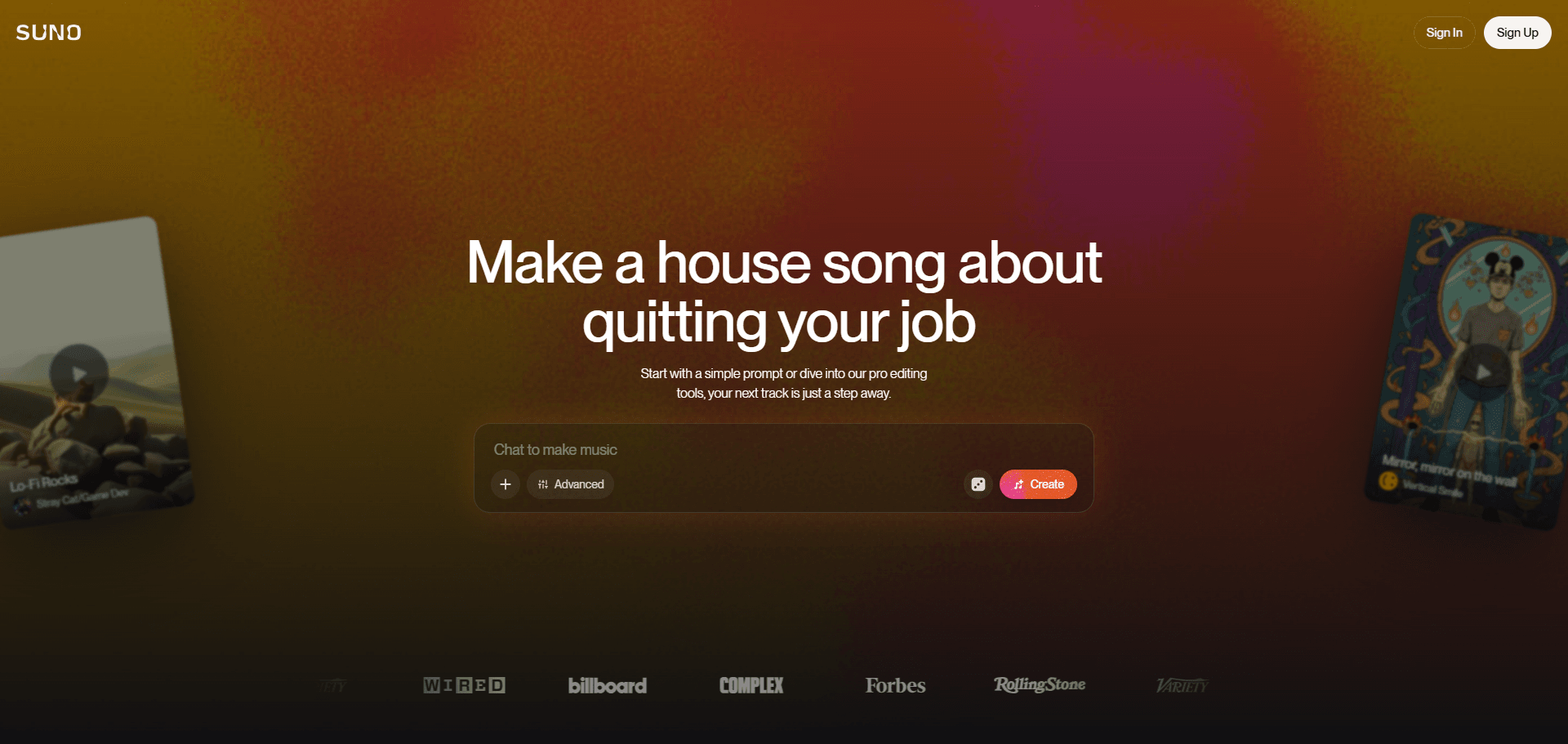
What it does: Generates complete original songs music, vocals, and lyrics from text prompts.
Why it's my top pick:
Suno caught me off guard. I was skeptical because "AI generated songs with vocals" sounded like a recipe for uncanny valley nightmares. But the output quality has improved dramatically over the past year.
I typed in "melancholic folk song about a lighthouse keeper" and got back something that genuinely sounded like a song. Not a hit single, but a coherent piece of music with verses, a chorus, and vocals that didn't make me cringe.
The free tier is surprisingly generous 50 credits per day, and each generation costs about 5 credits. That's roughly 10 songs daily for $0. For a tool this capable, that's remarkable.
Where it falls short:
You can't create AI covers here. Suno is purely about original content, so if you want to hear what "Bohemian Rhapsody" would sound like sung by an AI version of Frank Sinatra, this isn't your tool.
The vocals also have a certain "Suno sound" that experienced listeners will recognize. It's getting better, but it's still identifiable as AI generated.
Pricing breakdown:
| Free | Pro ($10/mo) | Premier ($30/mo) | |
| Daily credits | 50 | 2,500/month | 10,000/month |
| Commercial use | No | Yes | Yes |
| Priority queue | No | No | Yes Best for: Musicians wanting to prototype song ideas quickly, content creators needing original background music, anyone curious about AI music generation. |
- Udio
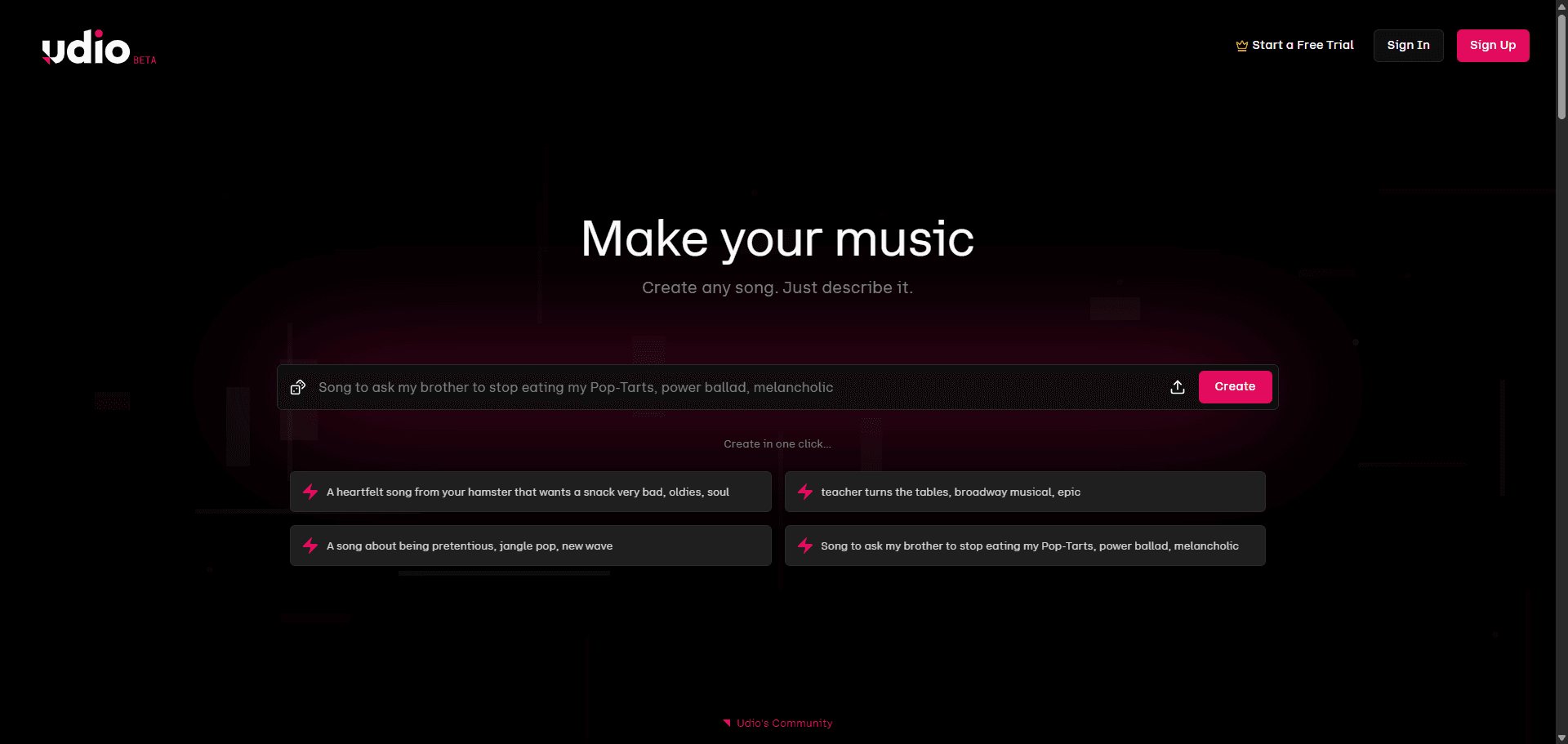
What it does: Similar to Suno text to song generation with vocals but with a focus on production quality.
The honest take:
Udio and Suno are the two heavyweights in the AI music generation space right now, and choosing between them comes down to priorities.
Udio consistently produces cleaner audio. When I imported outputs from both tools into Ableton and compared the frequency spectrum, Udio's tracks had less muddiness in the low mids and more clarity in the high end. It's subtle but noticeable if you're paying attention.
Where Udio really shines is handling complex arrangements. I asked both tools for a "progressive rock song with time signature changes," and Udio's output was noticeably more coherent the transitions felt intentional rather than random.
The catch:
Udio's free tier is stingier than Suno's. You get 100 credits per month (not per day), which translates to maybe 10 12 full songs. That's enough to evaluate the tool but not enough for serious ongoing use without paying.
The community is also smaller, so there's less shared knowledge about effective prompting techniques.
Pricing:
| Free | Standard ($10/mo) | Pro ($30/mo) | |
| Monthly credits | 100 | 1,200 | 4,800 |
| Audio quality | Standard | High | High |
| Commercial rights | No | Yes | Yes Best for: Producers who prioritize audio fidelity, anyone working on music that needs to sound polished without post processing. |
- Voicify AI
What it does: Converts existing songs into AI covers using a library of voice models.
Why it's the best Musicfy alternative for covers:
If your main use for Musicfy is creating AI covers hearing your favorite songs performed by different voices Voicify is the closest direct competitor, and in many ways, it's better.
The voice library is massive. We're talking 4,000+ models, including both trained on public data celebrity voices and community created custom voices. The selection dwarfs what Musicfy offers.
In my testing, voice accuracy was also more consistent. I ran the same song through both platforms using comparable voice models, and Voicify captured more of the vocal nuances the breathiness, the way certain syllables are emphasized, the subtle vibrato patterns.
The ethical elephant in the room:
Let's be real: AI voice covers exist in a legal gray zone. Using an AI model of a famous singer's voice to create content especially commercial content raises serious questions about rights of publicity and potentially copyright.
Voicify, like Musicfy, leaves these questions mostly to the user. The terms of service put the liability on you. If you're using these tools for anything beyond personal amusement, talk to a lawyer first.
Pricing:
| Free | Creator ($8.99/mo) | Pro ($24.99/mo) | |
| Conversions | Limited (3~5) | 30/month | Unlimited |
| Voice library | Full access | Full access | Full access |
| Custom models | No | No | Yes Best for: Hobbyists making AI covers for fun, musicians exploring what their songs would sound like with different vocals, meme creators (let's be honest). |
- Boomy
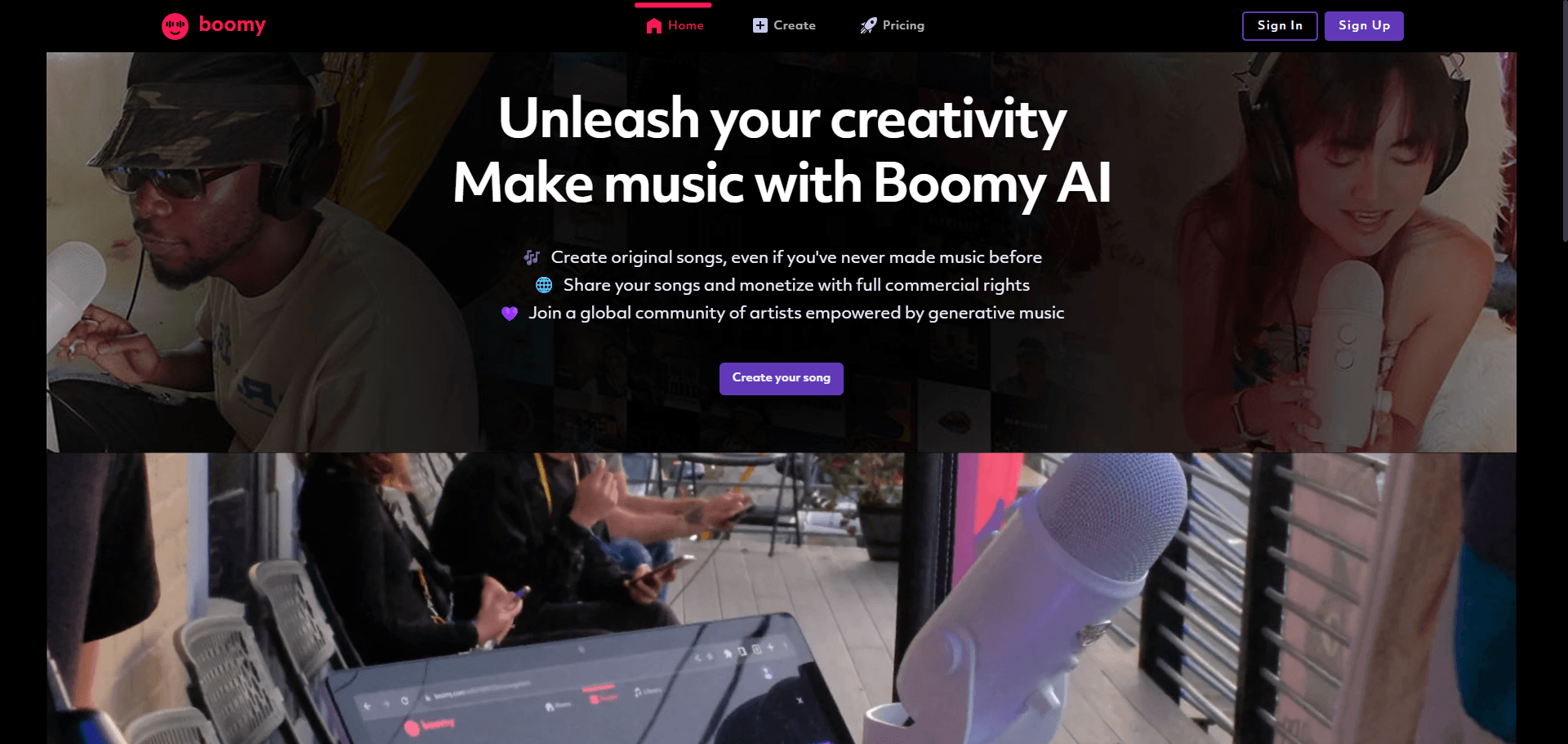
What it does: One click AI music generation with the option to distribute to streaming platforms.
The free option that actually works:
Boomy's entire pitch is accessibility. No musical knowledge required, no complex interface to learn, no credit limits that cut you off mid session.
You pick a genre, click "Create Song," and 30 seconds later you have a complete track. It's almost disconcertingly easy.
The catch? The output reflects that simplicity. Boomy songs sound... fine. They're listenable. They work as background music. But they lack the complexity and character you get from Suno or Udio. There's a certain formulaic quality that's hard to shake.
That said, for the price (free), it's hard to complain. If you just need background music for a video project or want to experiment with AI music without any commitment, Boomy delivers.
The unique feature:
Boomy has a built-in distribution system. You can release your AI generated songs to Spotify, Apple Music, and other streaming platforms directly from the app. They take a cut of any streaming revenue, but it's a remarkably frictionless way to get AI music out into the world.
Whether that's a good thing for the music ecosystem is a separate debate.
Pricing:
| Free | Creator ($2.99/mo) | Pro ($9.99/mo) | |
| Song creation | Unlimited | Unlimited | Unlimited |
| Releases/month | 1 | 3 | Unlimited |
| Revenue share | 80% Boomy | 80% Boomy | 90% You Best for: Absolute beginners, people who want to experiment without paying anything, content creators who need simple background music quickly. |
- AIVA
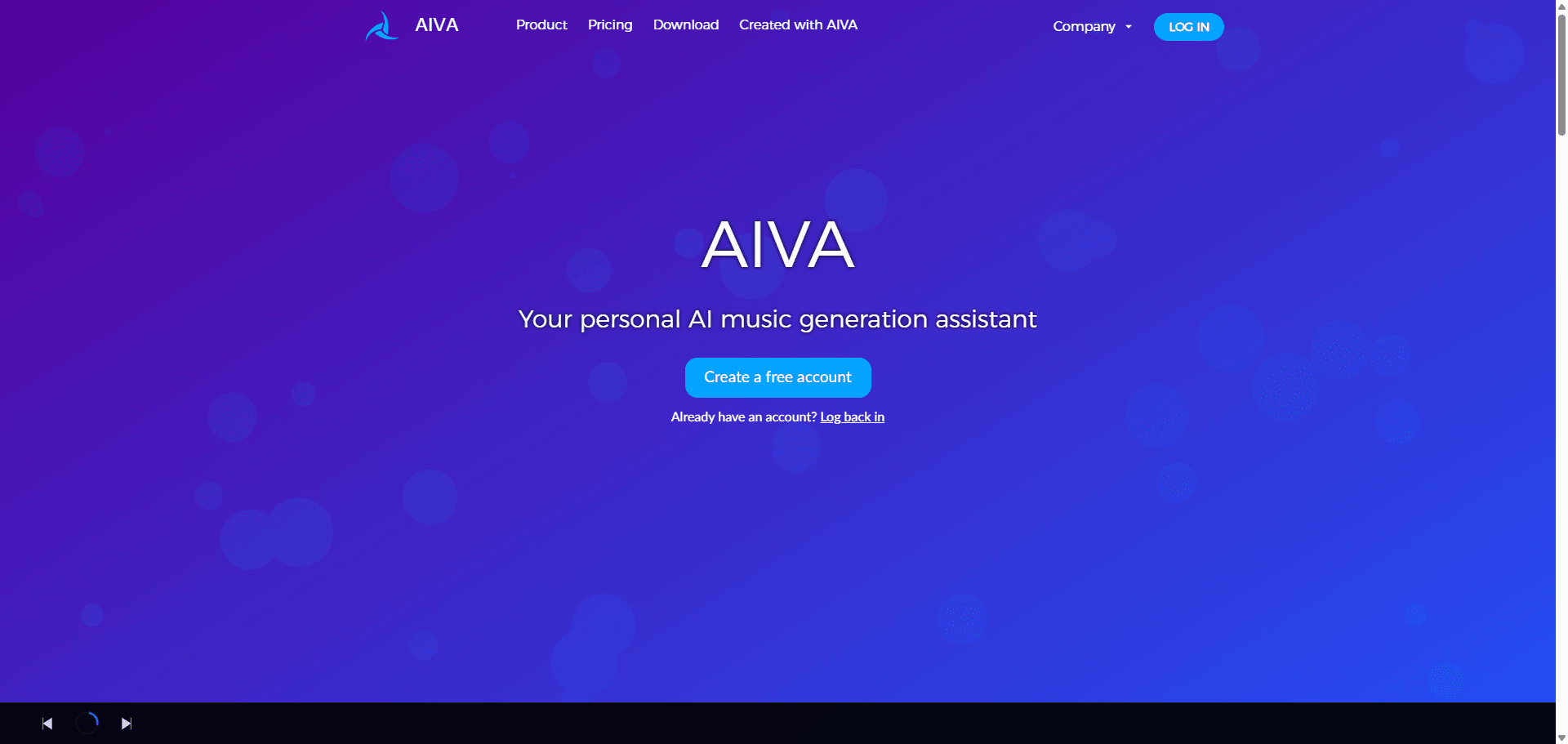
What it does: AI composition focused on orchestral, cinematic, and classical music.
A different beast entirely:
AIVA doesn't compete with Musicfy directly it occupies a completely different niche. If you need sweeping orchestral scores, tense cinematic underscoring, or classical style compositions, AIVA is purpose built for that.
The tool was actually recognized by SACEM (the French music rights society) as a composer, which is a neat bit of trivia that speaks to the quality of its output.
I used it to generate background music for a short documentary project, and the results were genuinely impressive. The compositions had appropriate emotional arcs, the orchestration made sense, and the MIDI export feature let me tweak things in my DAW.
Limitations:
This is not the tool for pop songs, hip hop beats, or anything with vocals. It's purely instrumental, with a heavy classical/cinematic bias. The learning curve is also steeper than the text to song tools there are more parameters to understand and adjust.
Pricing:
| Free | Standard ($15/mo) | Pro ($49/mo) | |
| Downloads/month | 3 | 15 | 300 |
| Commercial use | No | Limited | Full |
| Copyright ownership | No | Shared | Full Best for: Film/video composers, game developers, anyone needing orchestral or cinematic music. |
- Soundraw
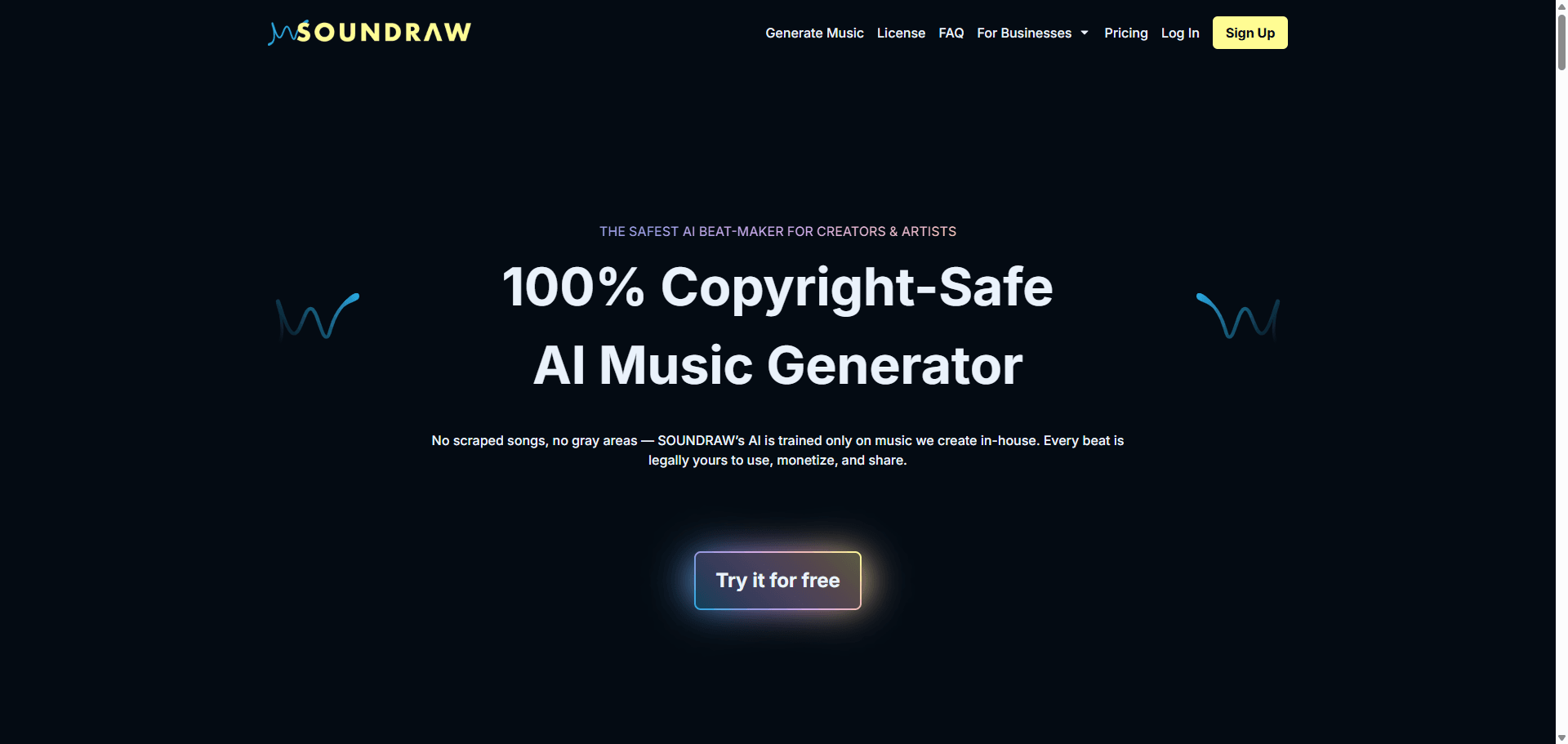
What it does: AI generated royalty free music designed for content creators.
The licensing clarity is the killer feature:
Here's Soundraw's pitch: everything you create is 100% cleared for commercial use. YouTube, TikTok, client work, advertisements, no copyright claims, ever. They guarantee it.
For content creators tired of navigating the murky waters of music licensing, this peace of mind is worth the premium. I've talked to several YouTubers who switched to Soundraw specifically because they were tired of dealing with ContentID disputes.
The music itself is solid somewhere between Boomy's simplicity and Suno's sophistication. You can customize tracks by adjusting tempo, energy, and length, which makes it easy to fit music to your video's timing.
The downside:
No free tier. At $19.99/month, it's one of the pricier options on this list. And the output, while professional enough, can have a "stock music" quality that sharp eared viewers might notice.
Also, no vocals. Soundraw is purely instrumental.
Pricing:
| Creator ($19.99/mo) | Artist ($39.99/mo) | |
| Downloads | Unlimited | Unlimited |
| Commercial use | Personal + client work | Full distribution rights |
| Stems | No | Yes Best for: YouTubers, podcasters, video editors who need worry free background music. |
- LALAL.AI
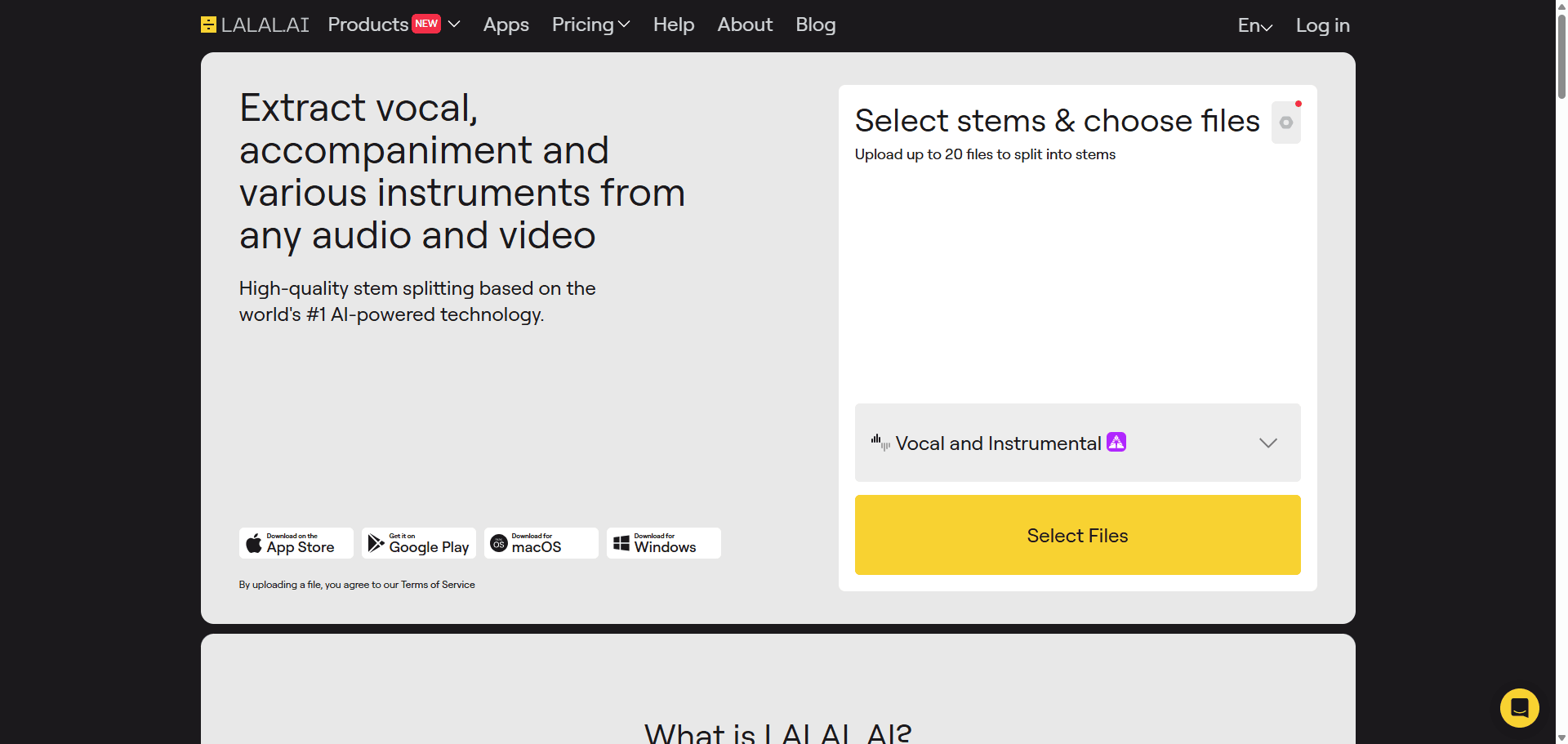
What it does: AI powered audio separation extracting vocals, drums, bass, and other stems from existing tracks.
The best at what it does:
LALAL.AI isn't a music generator; it's a music deconstructor. If you need to isolate the vocals from a song, remove drums from a track, or extract individual instruments from a mix, nothing else comes close to LALAL's accuracy.
I tested it against Musicfy's built in stem separation and the difference was night and day. LALAL's vocal extraction had minimal artifacts, and the separated instruments sounded clean enough to actually use in a remix.
The pay per minute model is unusual but makes sense for occasional users. You buy minutes in packs, and they never expire.
Pricing:
| Free | Lite ($15) | Plus ($30) | Pro ($100) | |
| Minutes | 10 | 90 | 300 | 1,000 |
| Quality | Standard | High | High | High |
| Stems | 2 | All | All | All Best for: DJs, remix artists, karaoke creators, anyone who needs to separate audio tracks. |
- Moises
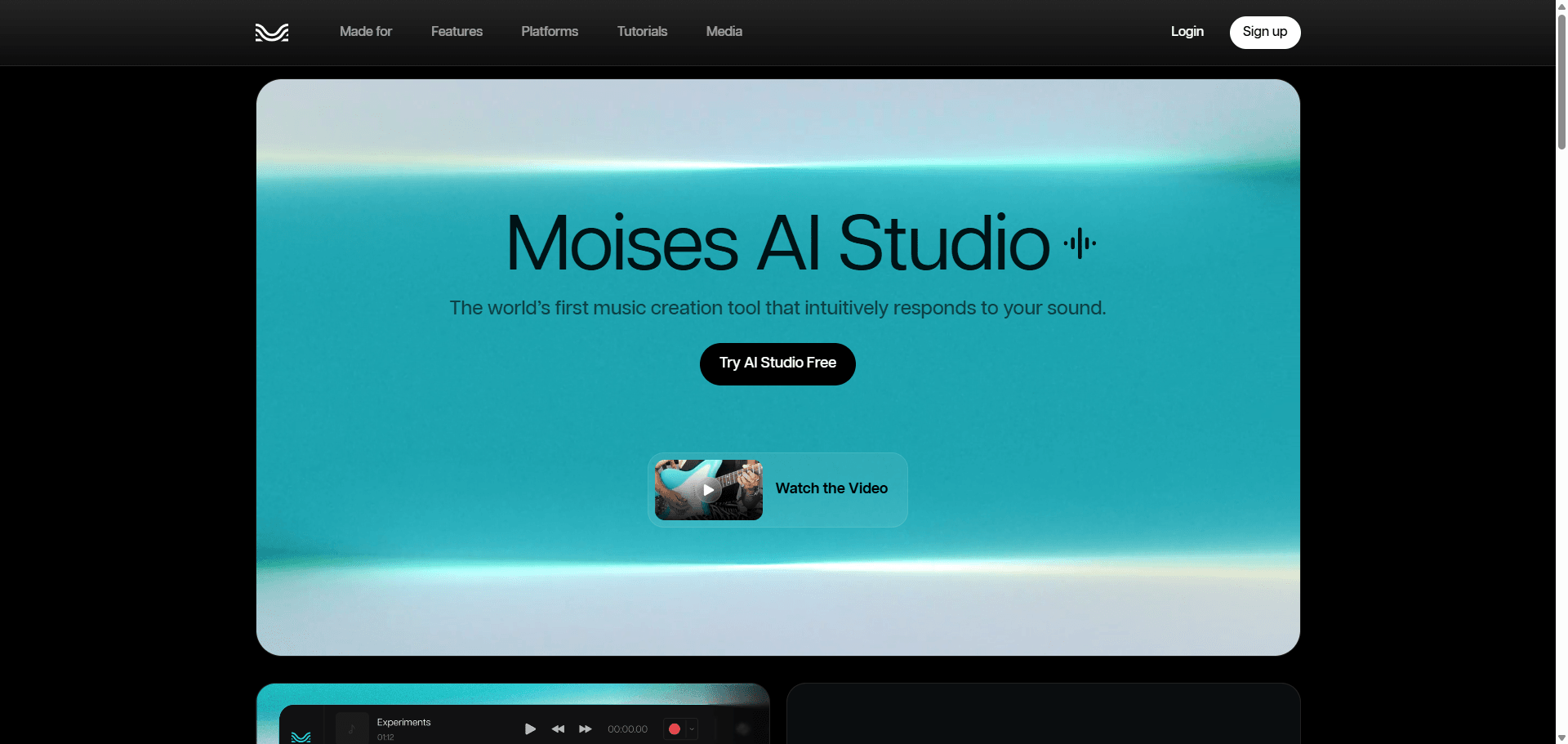
What it does: Stem separation plus practice tools for musicians.
More than just separation:
Moises started as a stem separation tool but evolved into something more useful: a practice companion for musicians.
Yes, it can isolate vocals and instruments like LALAL.AI. But it also lets you change the tempo without affecting pitch, transpose to different keys, generate chord charts automatically, and loop specific sections for practice.
If you're a musician learning songs by ear, these features are genuinely valuable. The app feels designed by people who actually play instruments.
The separation quality:
Slightly behind LALAL.AI in pure separation quality, but the gap has narrowed. For most use cases, Moises is good enough, and the additional practice features more than compensate.
Pricing:
Premium runs $4.17/month when billed annually ($49.99/year). There's a limited free tier that lets you test the core features.
Best for: Musicians learning songs, creating backing tracks for practice, anyone who needs stem separation plus editing tools.
- Mubert
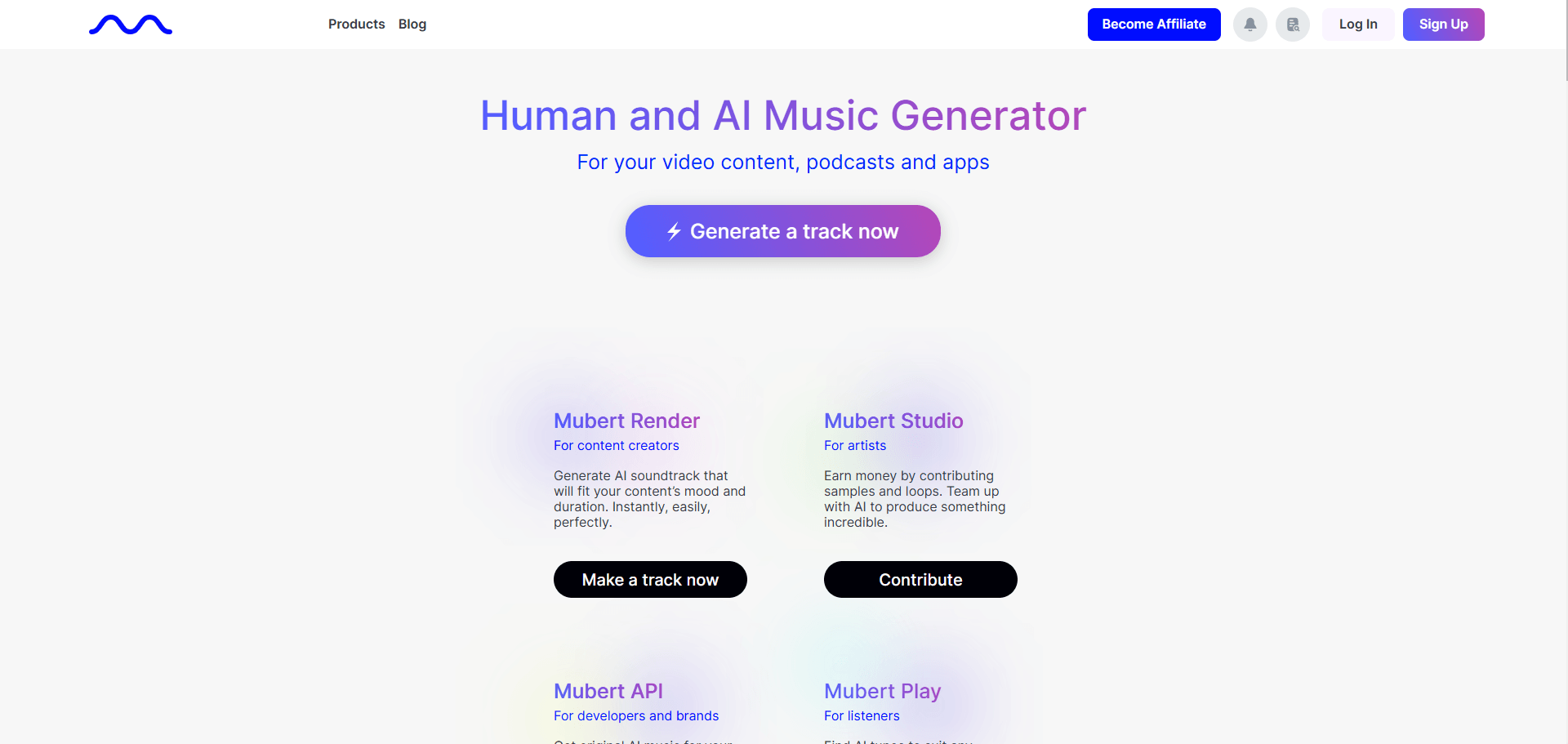
What it does: Generates infinite, non repeating music streams in real time.
The streamer's solution:
Mubert solves a specific problem: DMCA strikes. If you're a Twitch streamer, you know the nightmare of having your VOD muted or receiving a strike because a song played during your stream.
Mubert generates continuous, royalty free music that's guaranteed stream safe. It never repeats, adapts to different moods and energy levels, and won't get you in legal trouble.
What it's not:
This isn't a tool for creating songs. The output is ambient/electronic and works as background music, not foreground listening. You're not going to generate a track you'd add to a playlist.
Pricing:
| Free | Creator ($14/mo) | Pro ($39/mo) | |
| Personal use | Yes | Yes | Yes |
| Streaming | No | Yes | Yes |
| Downloads | No | 25/month | Unlimited |
| API access | No | No | Yes Best for: Twitch streamers, meditation/focus app developers, anyone needing continuous background audio. |
- Kits.AI
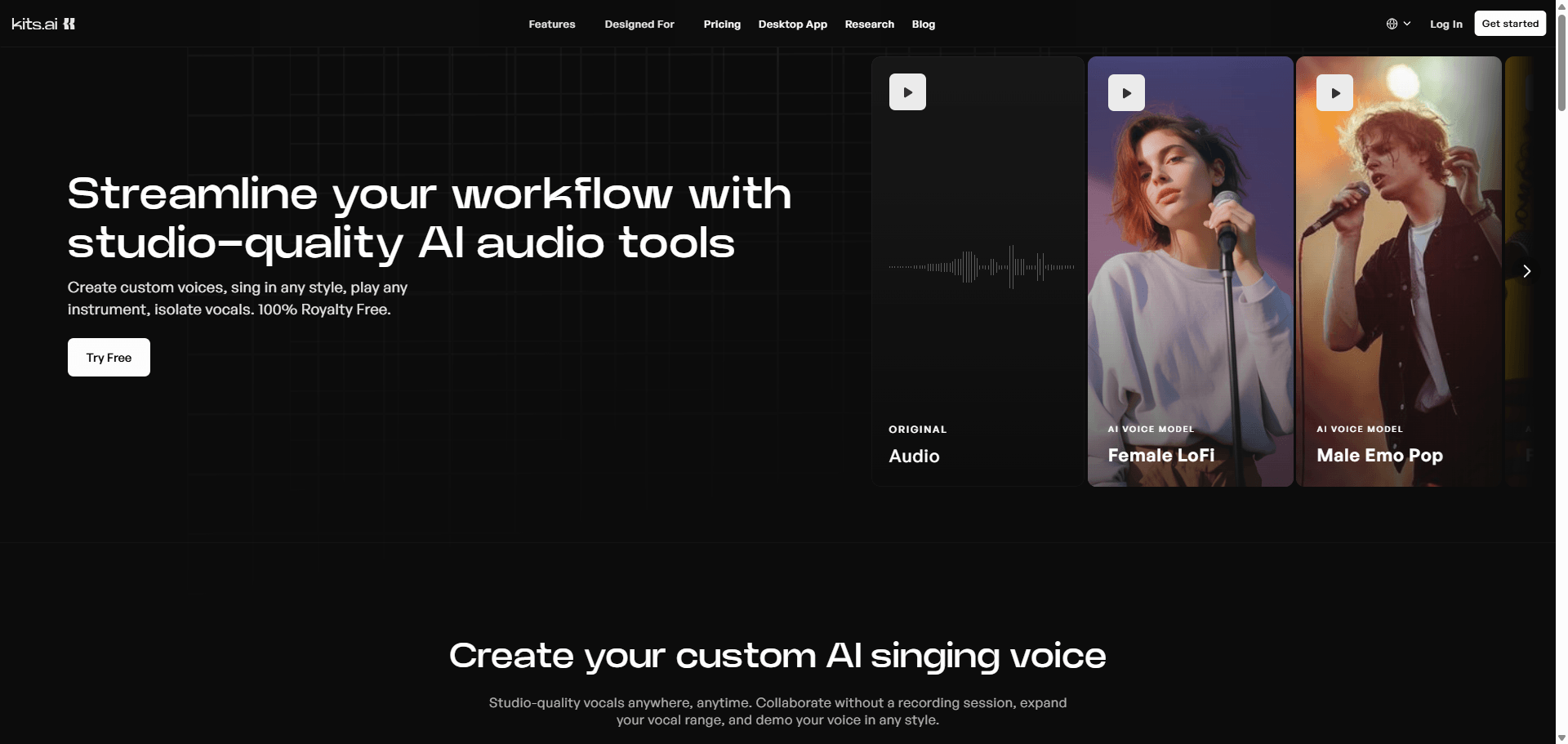
What it does: Voice cloning and conversion specifically designed for music.
For serious voice work:
Kits.AI is what you use when Voicify's pre trained models aren't cutting it. The platform lets you train custom voice models from audio samples, which means you can (ethically) create an AI model of your own voice or a voice you have permission to use.
The voice conversion quality is high, and the tool offers DAW integration for professional workflows.
The ethical approach:
Kits.AI is one of the few platforms in this space that actively promotes ethical use. They've partnered with artists who've licensed their voices, meaning you can use official AI versions of certain singers without the legal ambiguity.
Pricing:
| Free | Converter ($10/mo) | Creator ($25/mo) | |
| Conversions | Limited | 300 min/month | 600 min/month |
| Pre-trained voices | Yes | Yes | Yes |
| Custom training | No | No | Yes Best for: Artists creating AI versions of their own voice, producers needing consistent vocal sounds, anyone concerned about the ethics of voice cloning. |
- Stable Audio
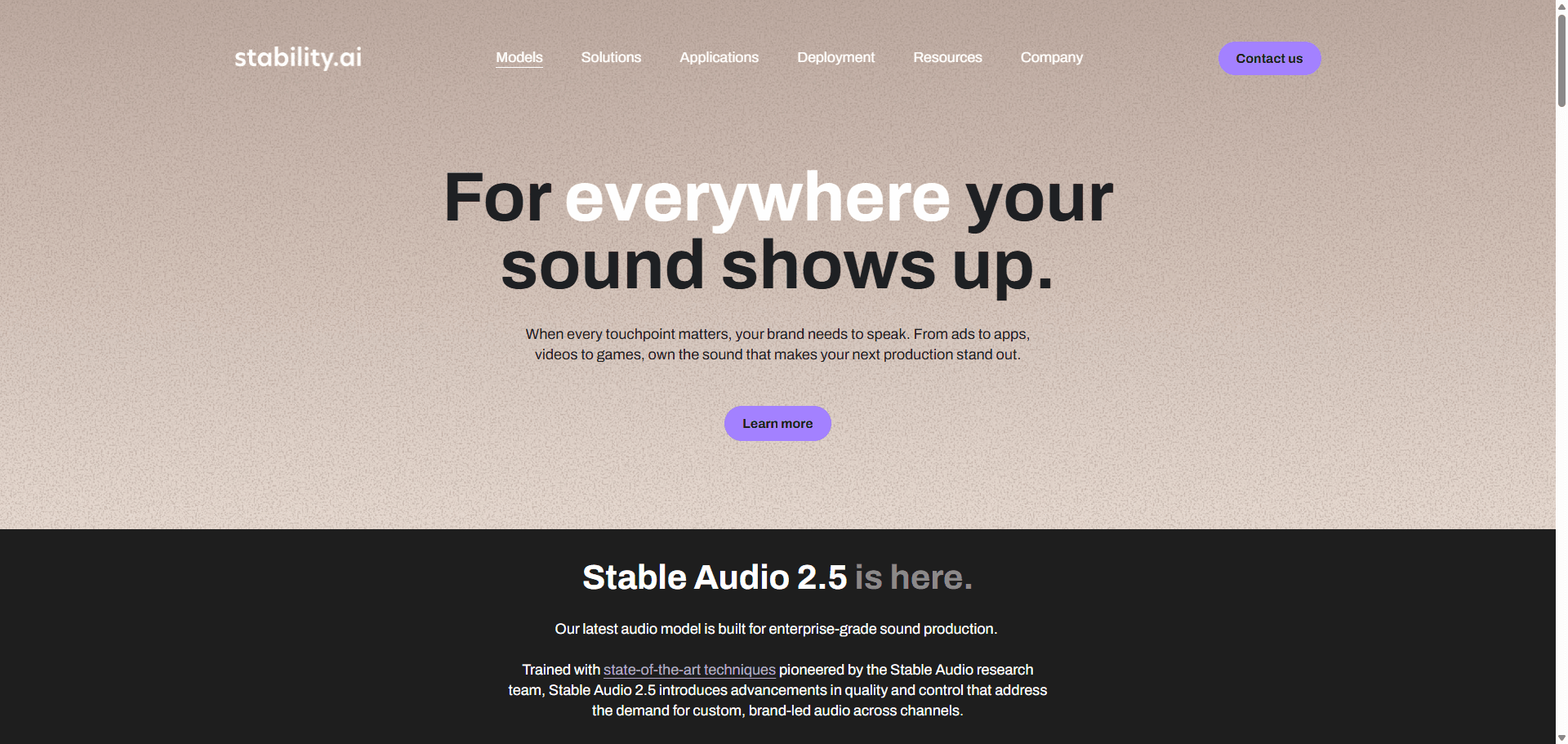
What it does: High fidelity instrumental music generation from Stability AI.
The technical specs are impressive:
Stable Audio generates music at 44.1kHz stereo proper CD quality. The audio is noticeably cleaner than some competitors, with less of the compression artifacts that plague lower quality generators.
The tool comes from Stability AI, the same company behind Stable Diffusion, so there's real technical chops behind it.
Limitations:
Currently instrumental only has no vocals. The free tier is fairly restrictive (20 tracks/month, 45 seconds max). And while the audio quality is excellent, the musical variety isn't as broad as Suno or Udio yet.
Pricing: Free tier available; Pro at $11.99/month for 500 tracks.
Best for: Producers who need high quality instrumental samples, anyone prioritizing audio fidelity over features.
12~15. Honorable Mentions
Covers.ai Simpler and cheaper than Voicify for basic AI covers. Starting at $5/month. Good if you just want occasional covers without committing to a bigger platform.
Splash Pro Gamified music creation, heavily used in Roblox. Great for younger creators or educational contexts, but not for serious music production.
Loudly Positioned for social media creators, with features like automatic video syncing. At $7.99/month, it's affordable, but the output quality is middle of the road.
Riffusion Free and open source, using a novel spectrogram diffusion approach. Fascinating from a technical perspective, but the output is experimental at best. Worth exploring if you're curious about the technology.
Direct Comparison: What I Actually Use Now
After all this testing, here's my honest setup:
For original songs: I use Suno AI for initial ideas and Udio when I need higher production quality. The free tiers of both are enough for my exploration phase.
For stem separation:LALAL.AI when I need the cleanest possible extraction, Moises for practice and casual use.
For background music:Soundraw for client work where licensing needs to be bulletproof, Boomy for quick personal projects.
For AI covers: I honestly don't use them much professionally due to the legal uncertainty. When I do experiment, Voicify AI has the best selection.
Frequently Asked Questions
Is there a completely free Musicfy alternative?
Boomy offers unlimited free song creation. Suno's 50 daily credits are also quite generous. Riffusion is entirely free and open source. For stem separation, LALAL.AI gives you 10 free minutes.
Can I use AI generated music on YouTube without copyright claims?
It depends on the platform. Soundraw explicitly guarantees no ContentID claims. Suno Pro and Udio Standard include commercial licenses. Boomy's distributed music is cleared. Always check the specific terms of service.
Which tool sounds most like real music?
Udio currently produces the most polished audio. Suno is close behind and arguably more creative. For orchestral music, AIVA is remarkably convincing. None of them are indistinguishable from human made music yet, but they're getting closer.
Are AI voice covers legal?
The honest answer is "it's complicated." Using AI to mimic a specific artist's voice for commercial purposes likely violates their right of publicity in many jurisdictions. Personal, non commercial use is grayer. This is evolving legal territory if you're making money from AI covers, get legal advice.
What happened to [specific tool not on this list]?
I only included tools I could actually test and verify. Some AI music tools have shut down, pivoted, or become vaporware. If you're wondering about a specific one, leave a comment and I'll look into it.
The Bottom Line
The AI music landscape has exploded over the past two years. Musicfy was an early mover, but it's no longer the only game in town or even the best one for many use cases.
Choose based on what you actually need:
- Making original songs → Suno or Udio
- Making AI covers → Voicify AI or Kits.AI
- Separating stems → LALAL.AI or Moises
- Background music for content → Soundraw or Mubert
- Zero budget → Boomy or Suno's free tier
Whatever you choose, start with the free tier. These tools are evolving fast, and what's best today might not be best in six months. Experiment, find what works for your workflow, and don't pay for more than you need.
